
Where are Scotland's social enterprises? A baseline for the Community Wealth Building Act
The Community Wealth Building (Scotland) Act, passed in February 2026, sets an ambitious agenda for growing Scotland's social enterprise sector. The 2024 Independent Review recommended tripling the number of Inclusive and Democratic Business Models (IDBMs) — social enterprises, cooperatives, and community-owned businesses — from around 7,000 to 21,000 by 2034. Local authorities must now produce CWB action plans. But before councils can plan, they need a baseline: how many of these organisations exist today, where are they, and how has the sector been growing? This is the first of three posts examining the organisational base key to the Act's success. We used the Third and Civil Society Sector Database — a dataset covering over 700,000 UK civil society organisations — to map the current landscape of Community Interest Companies (CICs) and co-operatives/mutuals across Scotland's 32 local authorities.
Figure 1 shows the density of active CICs and co-operatives/mutuals per 10,000 population across Scotland's 32 local authorities. The variation is striking: Na h-Eileanan Siar leads with 18.8 organisations per 10,000 people — nearly 12 times the rate of East Renfrewshire at the bottom (1.6). Island and rural authorities dominate the top of the chart, with Orkney (14.1), Scottish Borders (9.8) and Argyll and Bute (9.5) following. Glasgow (9.2) is the highest-density urban authority. The Scotland-wide average is 5.3 per 10,000, but 20 of 32 local authorities fall below it. North Ayrshire — Scotland's first CWB council — sits at 4.3, below the national average.
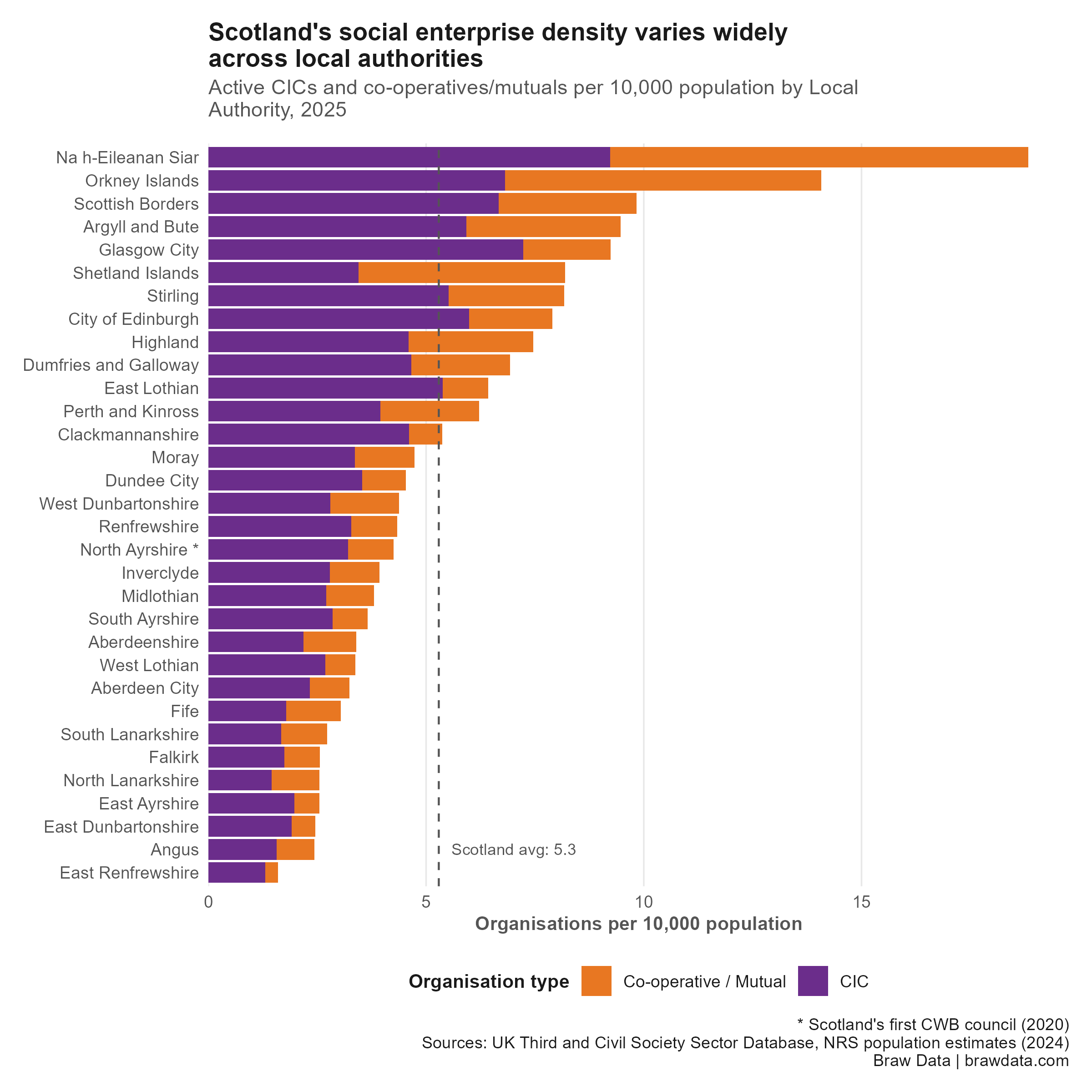
Figure 1: CIC and co-operative/mutual density per 10,000 population by Scottish Local Authority
Figure 2 tracks registrations and de-registrations from 2010 to 2025, comparing the top 5 and bottom 5 density local authorities alongside North Ayrshire. Registrations in the top 5 LAs have accelerated sharply — from around 30 per year in 2010 to 155 in 2025. Glasgow accounts for most of this: 122 new CICs were registered in the city in 2025 alone, up from 74 the year before. The bottom 5 have grown more slowly, from 4 to 35 per year. De-registrations are also rising across both groups, reflecting natural churn as the sector matures. North Ayrshire's trajectory shows no visible step-change following its adoption of CWB in 2020 — its registration and de-registration volumes have remained relatively flat.
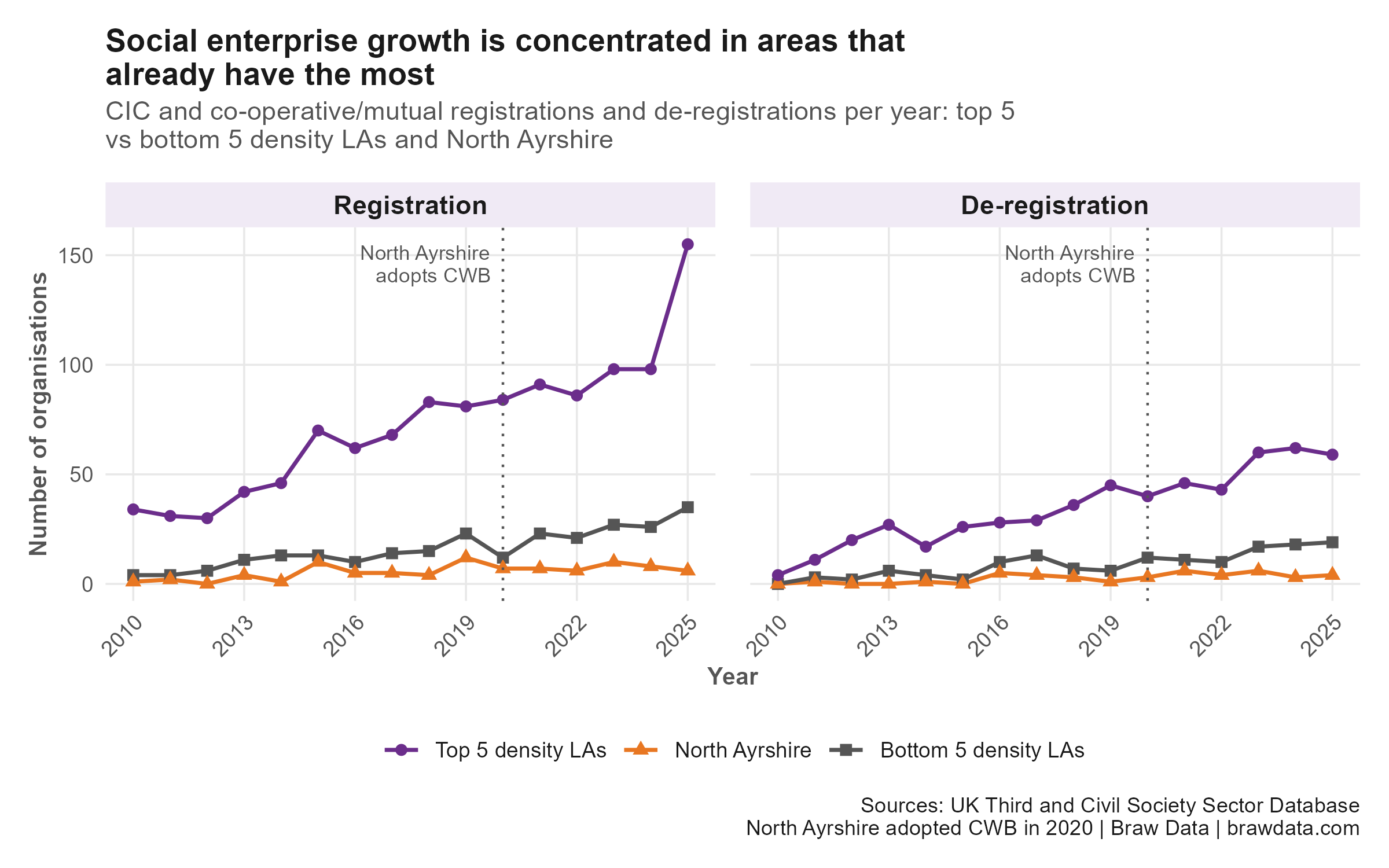
Figure 2: Registration and de-registration trends for CICs and co-operatives/mutuals, 2010-2025
Scotland's social enterprise landscape is deeply uneven. The sector is growing nationally — 2,935 active CICs and co-operatives/mutuals across 32 local authorities — but growth is concentrated in areas that already have the most. At current trajectories, high-density areas are pulling further ahead while low-density areas risk falling further behind. North Ayrshire's CWB adoption has not yet translated into distinctive growth in registered IDBMs. The next post examines what these organisations do — and where the gaps in provision are starkest. It is worth noting that the CWB Act's vision extends beyond what we measure here — small charities, employee-owned businesses, and unregistered community groups all fall within scope but are not captured in these figures.
Data: UK Third and Civil Society Sector Database; NOMIS population estimates (mid-2024). Organisations assigned to local authorities by postcode. Figures represent CICs and co-operatives/mutuals with valid registration dates and postcodes.