
Who are Scotland's CICs for — and where does the value flow?
Scotland's Community Wealth Building Act takes aim at where value goes and who benefits. Its success depends in part on growing a community enterprise sector that both serves the communities who most need it and keeps the wealth it creates circulating locally. Our previous post mapped how many CICs and co-operatives Scotland has and where they are concentrated. This post asks a different question: who are the beneficiaries of these organisations' activities, and what do they commit to doing with their surplus? Every Community Interest Company answers both questions when it incorporates — its CIC 36 form names the beneficiaries it will serve and the uses it commits its surplus to. We classified these statements for 1,610 Scottish CICs.
Figure 1 shows the top beneficiary groups stated by Scottish CICs, classified using the UKCAT taxonomy (extended with 14 CIC-specific codes). The headline is that a third of Scottish CICs (34.7%) name the general public or local community as beneficiaries — broad, place-based framing. But the next nine categories reveal specificity: 23.6% name people with mental health needs, 22.4% name civil society organisations themselves, and 20.3% cite people in poverty or disadvantage.
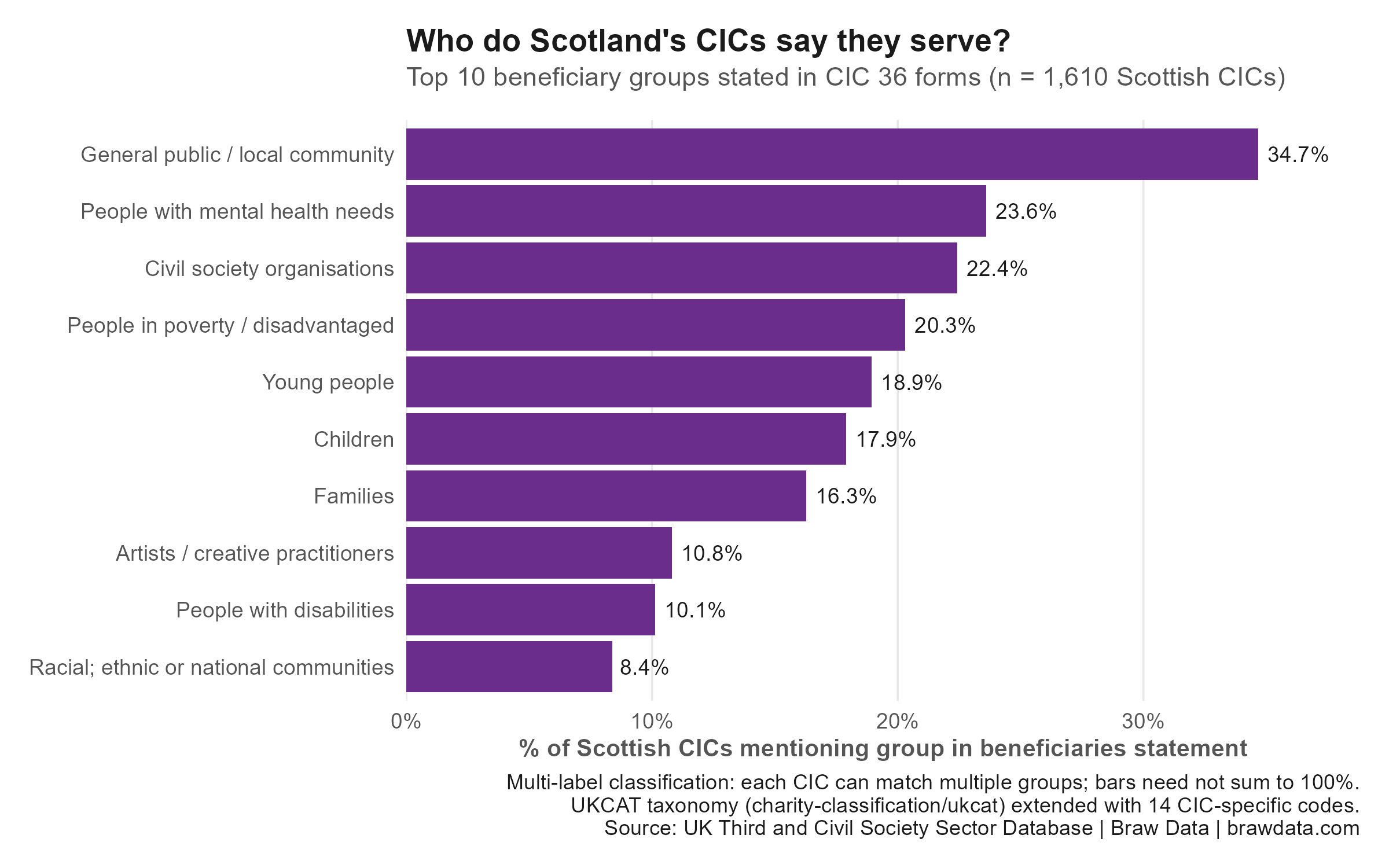
Figure 1: Top 10 beneficiary groups stated in CIC 36 incorporation forms by Scottish CICs
Figure 2 classifies the same CICs by what they say they will do with their surplus, applying a machine-learning algorithm (BERTopic) on the raw statement text. Three themes cover 85% of surplus use statements: reinvesting in the organisation (38.9%), benefitting local communities (24.2%), and donating to asset-locked bodies with CIC regulator consent (22.3%). Smaller themes include running festivals, and mental-health services. A 4.2% residual — "other specific uses" — captures genuinely idiosyncratic commitments: food-bank donations, sponsoring sports clubs with kits, growing willow for traditional crafts. Most Scottish CICs commit to inward reinvestment rather than outward distribution, though some explicitly mention distribution of dividends to shareholders.
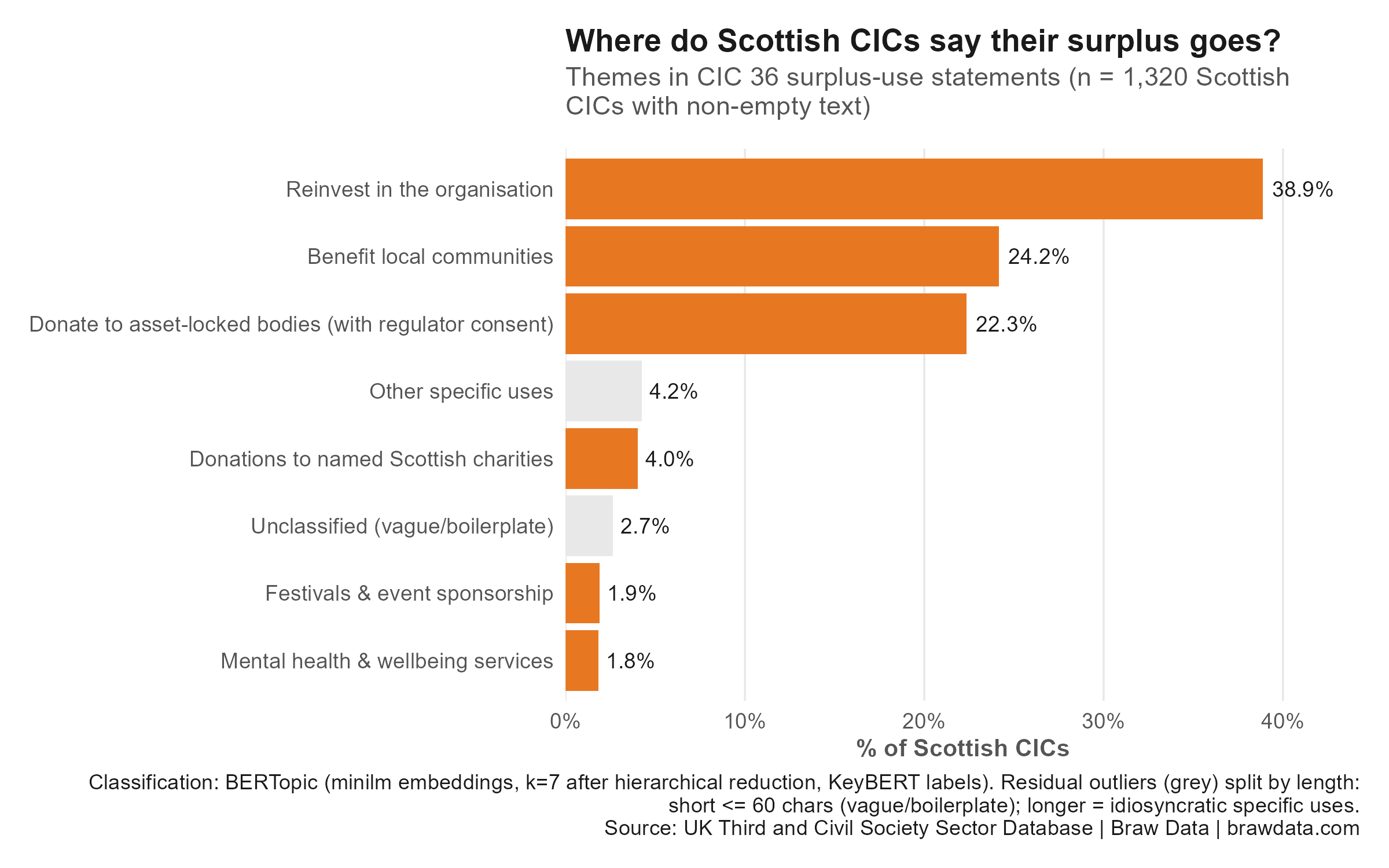
Figure 2: Surplus-use themes in CIC 36 incorporation statements by Scottish CICs
Scotland's Community Interest Companies serve a pluralistic set of beneficiaries — not just a general-public audience but mental-health, poverty, and civil-society constituencies that the broader charity sector sometimes overlooks (at least when formally defining their beneficiary groups). Most CICs commit their surplus to organisational reinvestment, with smaller shares naming community benefit or asset-locked transfers. Each speaks to a different CWB priority: reinvestment builds capacity inside the plural-ownership sector, community spending puts retained value to socially productive local use, and asset-locked transfers circulate wealth across the wider third sector. The CIC asset lock blocks extractive leakage in every case — what differs is the scale at which value circulates. The final post in this series asks whether Scotland is on track to triple its Inclusive And Democratic Business Models sector by 2034 — and where CWB action plans should focus.
Data: UK Third and Civil Society Sector Database. Beneficiary classification uses the UKCAT taxonomy extended with 14 CIC-specific codes (BE116–BE129). Surplus-use classification uses BERTopic with MiniLM sentence-transformer embeddings.