
Below the radar: which communities have the most hidden civil society?
Official registers like the Charity Commission and OSCR capture the formal voluntary sector, but grassroots community groups — parent-and-toddler clubs, mutual aid networks, community gardens — often sit below the radar. In October 2025, 360Giving published an update to its excellent Below the Radar series, a dataset identifying over 21,000 unique grassroots organisations through grant records that don't appear on any official register. By combining these with the UK Third and Civil Society Sector Database, our linked register of 358,000 active charities, CICs, and other civil society organisations, we can map where the official count most undercounts civil society.
Figure 1 shows the percentage increase in civil society organisations per local authority when Below-The-Radar (BTR) grassroots groups are added to the Spine count. The geographic pattern is stark. Wales and Scotland see the largest uplift: the median Welsh local authority gains 13.4% more organisations, and the median Scottish local authority gains 9.4%, compared to just 3.4% in England. The highest increases are in Torfaen (24.8%), East Ayrshire (23.2%), and Blaenau Gwent (23.0%) — areas that might look underserved on official registers alone. t the other end, affluent English areas like the City of London (0.3%), Wokingham (0.3%), and Westminster (0.5%) see minimal change — their formal sector already captures most organised activity.
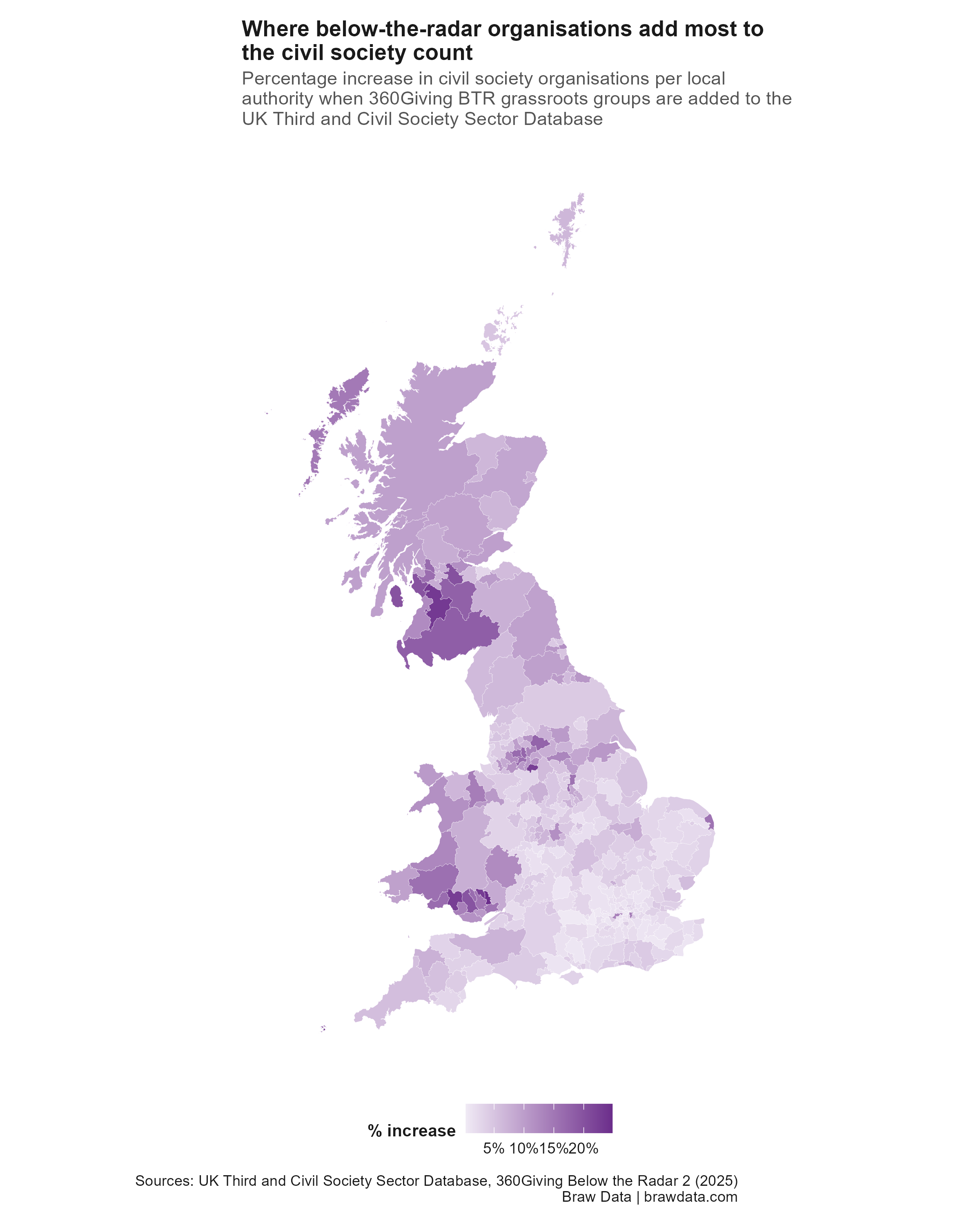
Figure 1: Percentage increase in civil society organisations per local authority when BTR orgs are added
Figure 2 focuses on England, where we can link to the Index of Multiple Deprivation. The relationship is clear: more deprived local authorities tend to have a higher proportion of hidden civil society. Grassroots community action is most likely to go uncounted precisely where it may matter most.
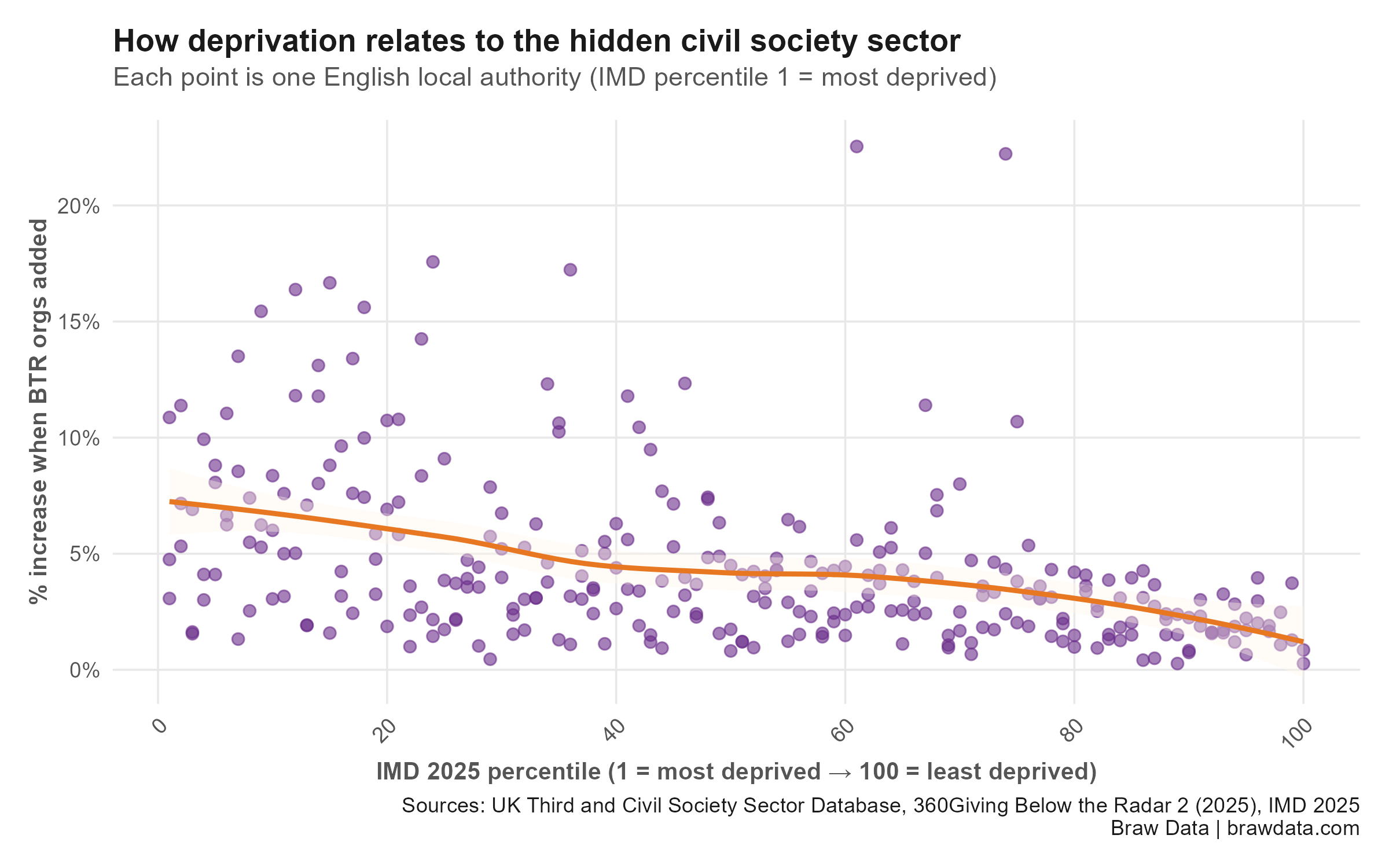
Figure 2: Percentage increase vs IMD 2025 percentile for English local authorities
These findings reinforce a simple but important point: official registers undercount civil society, and they undercount it most in less affluent areas and in Scotland and Wales. Funders and policymakers who rely solely on register data risk misjudging where community capacity exists. The gap is not random — it is systematically larger in places where grassroots mutual support tends to operate informally. Datasets like 360Giving's Below the Radar provide a vital corrective, making visible the organisations that formal registers miss.